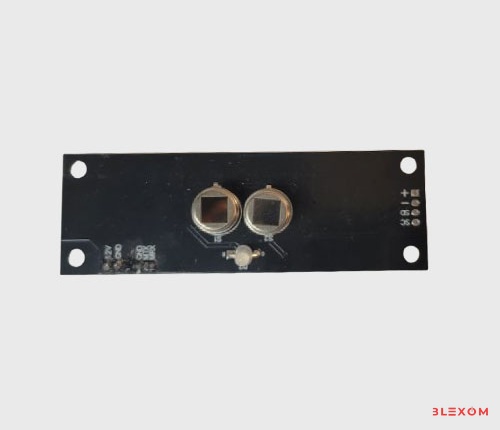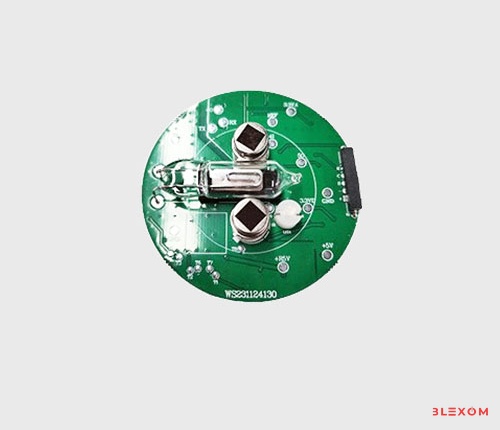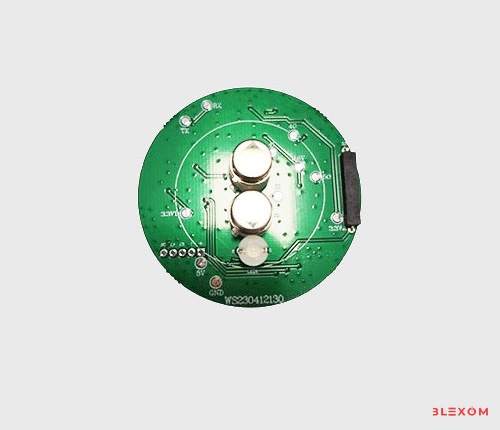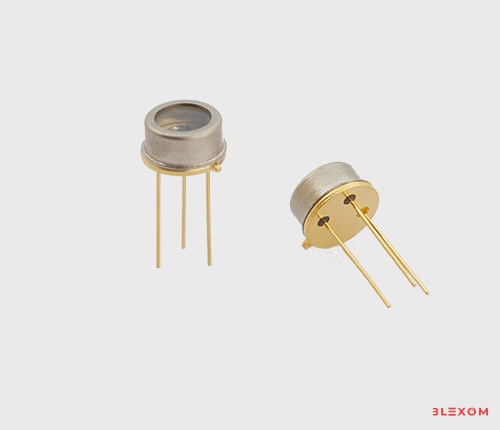
Overview
The uncooled lead sulfide (PbS) sensor belongs to the lead – salt type infrared photoconductive sensor family. Its working principle is grounded in the photoconductive effect of semiconductor materials. Through this mechanism, it converts infrared radiation energy into electrical signals. The PbS sensor demonstrates strong absorption and response within the short – infrared (1.0 – 3.0μm) spectral bands. It is widely applied in infrared gas detection, as well as flame and high – temperature detection.
Key Features
- Housed in a TO – 5 package.
- Operates in an uncooled mode.
- Features a fast response.
- Exhibits a high detection rate.
Applications
- Appropriate for flame monitoring in flammable and explosive areas.
- Detection of sparks and flash points.
- Temperature detection of high – temperature industrial furnaces.
- Infrared spectrum analysis.
Technical Specifications
| Parameter | Value |
| Model | SRW-X2323(H/A/B) |
| Photosensitive area | 2x2mm |
| Response time | 200μs |
| Dark resistance | 0.3 – 3.0MΩ |
| Response wavelength range | 1 – 3μm |
| Window type | Sapphire; Narrow Band Filters |
| Working temperature | – 30 to 60°C |
| Central wavelength | Sapphire: 1 – 6μm; Narrow Band Filters: 1.05μm, 2.7μm |
| Peak Responsivity | 4×10⁵ V/W |
| Peak Normalized Detection Rate | 1×1011 cm·Hz1⁄2/W |