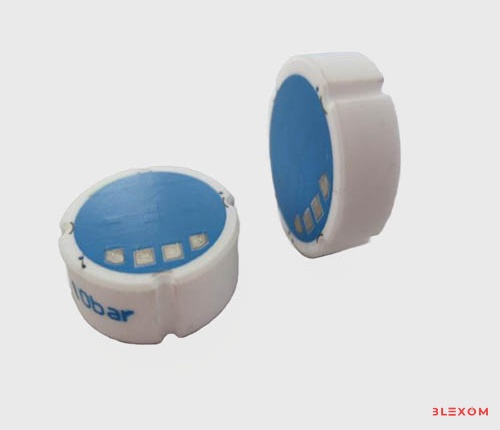
Overview
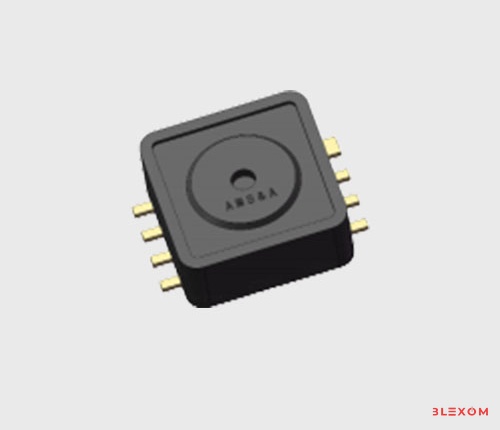
AVCT12 ceramic pressure sensor adopts ceramic base, made into ceramic piezoresistance pressure sensor with thick-film technology. It’s size Φ18mm*6.35mm. Ceramic is a kind of material with high elasticity, corrosion resistance, wear resistance, resistance to impact and vibration. Ceramic’s good thermal stability and thick film high temperature sintering process make the ceramic pressure sensor’s operating temperature range up to -40 ~ 125 °C. The ceramic’s high elasticity and creep resistance make the ceramic pressure sensor have good long-term stability. Besides, the corrosion resistance character makes the sensor have unique advantages in the application such as the refrigeration, chemical and environmental protection and other fields.
Key Features
- Ceramic sensitive film with high overload capacity
- Laser calibration for zero and full scale
- Excellent corrosion resistance, wear resistance
- Impact resistance, anti-vibration
- High precision, good stability
- Wide operating temperature range
- Small size, easy to package
- Environmental protection
Applications
- AVCT12 ceramic pressure sensors are widely used in: process control, environmental control, hydraulic and pneumatic equipment, servo valves and transmission, smart building automation, chemical and chemical industry and medical instruments and many other fields.
- Now, high-performance and low-cost ceramic sensor is the direction of development of pressure sensors with the trend of replacing other type sensors in Europe and the United States. In China, more and more users choose ceramic sensors instead of strain and diffusion Silicon pressure sensor.
Technical Specifications
| Item | Parameter |
| Size | Φ18mm*6.35mm |
| Detection Range | 2bar、5bar、10bar、20bar、50bar、100bar |
| Working voltage | 2-20V |
| Sensitivity | 1.5—4mv/V,typical value 2.5±1.0mv/V |
| Input, output resistance | 10KΩ±30% |
| Temperature range | -40°C-125°C |
| Zero output | 0—±0.4 mv/V,,typical value 0±0.25mv/V |
| Linearity, hysteresis, repeatability | typical value ±0.3 %FS |
| Temperature drift | Typical value ±0.05%FS/°C |
| Safe overload | two times of rated detection range (when sensitivity is typical value) |
| Stability | Better than ±0.5%FS / year(if it is used properly) |